
Choosing a sleeping bag or quilt?
Choosing the perfect backpack can be quite a difficult process as there are so many variants: Do you want a sleeping bag or quilt? Down or Synthetic? What type of down, what fill level? Ethical down or non-ethical? What does filling and heating mean? What is the difference between down 650 and 900? What type of synthetic insulation should you buy? Long or short staple synthetic insulation? Primaloft or one of the other thousands of proprietary insulations?
Hopefully this little guide will help your decision-making process and give you enough confidence to pick out a sleeping bag that fits your particular needs and wants.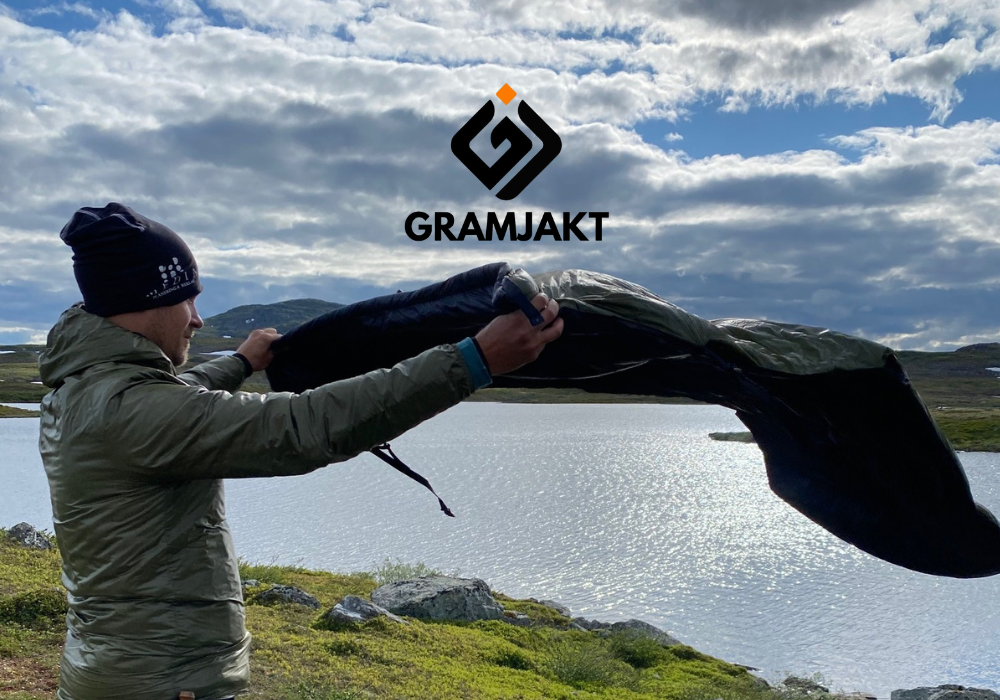
The Gramjakt Ul Quilt is a quilt that we have developed ourselves. Extra warm, extra wide and can be used down to -6 degrees.
First is the decision of Synthetic or down insulation:
Both will keep you warm if you buy the right sleeping bag for the job. Considering your comfort temperature - there is no reason to buy a 20 degree summer sleeping bag, if all your hiking is done in 0c degree temperatures - the 20c degree backpack will serve no purpose other than to take the weight of the bag and keep you frozen at night. A sleeping bag should be the only investment above all, or rather for your sleep system it should be your only solid investment. Don't skimp to save money. Buy what you need and remember that a good sleeping bag is an investment on your comfort and safety for years to come.
Another factor to consider is your clothing as part of your sleep system. It is perfectly acceptable to buy a lighter backpack and complement it with your camp clothes. Jackets, rainwear, long johns - these are all likely to be worn if the night & gets cold enough and if your sleeping bag is not warm enough.
The following article will focus on a review of the pros and cons of different sleeping bags and duvets. For more detail on the different articles on the difference, click on the respective links in this article.
Down sleeping bag advantages:
- Down is by far the most effective insulation available. The warmth to weight ratio is second to none.
- Down has the most durability - a good down sleeping bag will last up to 20 years if well cared for.
- Down is by far the most compressible material.
Down sleeping bag disadvantages:
- Down is more prone to moisture. Because down clumps when wet, it loses all warming properties when damp compared to synthetic insulation.
- Down sleeping bags tend to be more expensive than synthetic insulation
- Down is an animal by-product. A bird needs to be killed or shipped alive to get to the clothing that is down.
Synthetic insulation sleeping bag benefits:
- Cheaper than down.
- Efforts are being made to make synthetic bags more compressible - but still not at the same level as down.
- Synthetic insulation tends to perform better than down when wet.
Synthetic insulation disadvantages:
- Heavy synthetic insulation is not a very effective form of insulation.
- Does not compress well
- Not as durable as down sleeping bags
Sleeping bag or quilt?
So now you've chosen the type of insulation you want to use, it's time to choose between sleeping bag or quilt. Both, again, have their pros and cons, and this is just a simple list to help you in your decision-making processSleeping bag advantages:
- Fully closed closure - no heat loss due to leaks. They protect you from wind drafts and heat loss.
- More flexible use in the camp. It is quite easy to get in and out of a sleeping bag, sit up and get cozy as it is not attached to anything either.
- Sleeping bags tend to be cheaper as they are more popular = on the economical side.
Sleeping bag disadvantages:
- Tend to weigh more than blankets because the construction is not as efficient, insulation doesn't work if pressed.
- Easy to tangle if you move around a lot while sleeping.
Quilts advantages:
- Lighter, more efficient use of insulation.
- One can move around while sleeping without getting tangled.
- Quilts are more compressible than sleeping bags.
Disadvantages of quilts:
- Tend to be colder than a sleeping bag unless you close it properly.
- Can be perceived as cumbersome to have to button straps on the sides.
How I reason myself
Why I prefer quilts to sleeping bags
For me, quilts are the obvious choice when hiking. There are several reasons for that:
1. simplicity and freedom of movement
A quilt is much easier to get in and out of than a classic sleeping bag. You don't have to fuss with zippers and tight openings. It also allows greater freedom of movement - perfect for those who toss and turn, change positions or want to stretch out properly during the night.
2. better temperature regulation
With a quilt, it's easier to adjust the temperature. If it's warm, you can open it up and use it as a blanket, and if it's chilly, you can tighten it and close it. This flexibility allows you to sleep comfortably in a wider range of temperatures without the need for multiple sleeping systems.
3. lighter weight and smaller packing volume
A quilt weighs less and takes up less space in your backpack. That's because it doesn't have the unnecessary down you're still compressing when you sleep in a sleeping bag - down that doesn't provide any insulation but still adds weight and volume.
4. versatility
At camp, a quilt can be used as a warm blanket around your shoulders or legs. And if you need a warmer solution, you can easily combine it with another quilt or even a sleeping bag. This makes quilts a more flexible and versatile choice.
5. experiences of long-distance hikers
At Backpackinglight, quilts have become more popular than sleeping bags. In a major interview survey of Green Belt hikers, quilts were rated higher than sleeping bags. In particular, the Enigma and Revelation models from Enlightened Equipment received a lot of praise, but several other brands also work really well.
6. recommendations
-
Do you move around a lot in your sleep? Then quilts are superior - choose an Extra Wide model if you are broad-shouldered or want extra freedom of movement.
-
Do you lie still on your back like a mummy sleeping bag? Then both quilts and lightweight sleeping bags work equally well, the choice is more a matter of taste.
-
Want to minimize thermal bridges? Then it may be worth a few extra grams for a wider quilt that fits better around the body.
Marcus Falck Backpackinglight