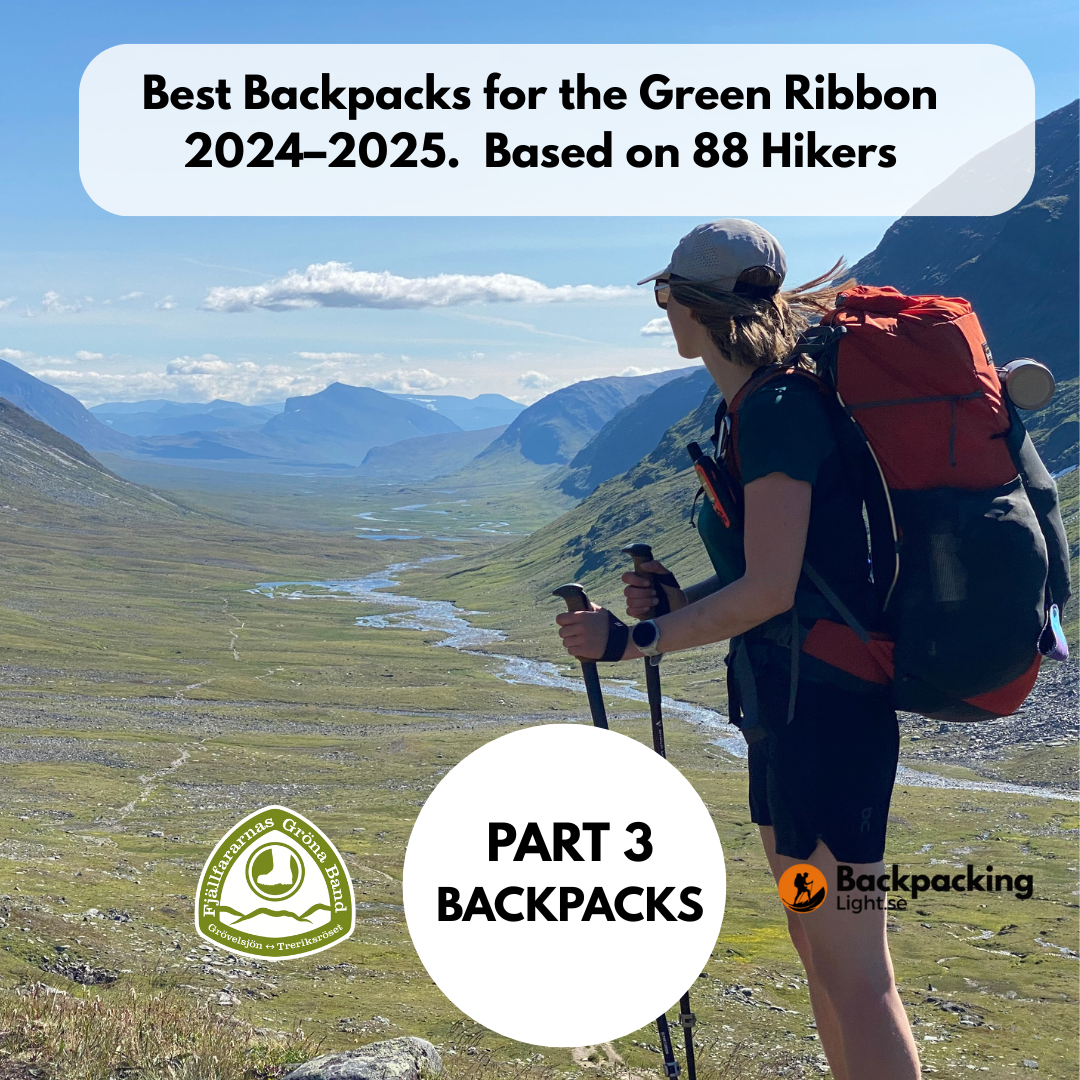
Best backpacks for the Green Belt
Based on 88 hikers' experiences in 2024-2025
Choosing the right backpack for the Green Belt is crucial.
For two years, Backpackinglight, together with the Green Ribbon organization, has collected data from 88 hikers who completed the entire route - a total of over 114,400 kilometers in the mountains.
Here's what actually works.
Based on number of users, ratings and experiences:
-
Hyperlite Mountain Gear (HMG ) - most users
-
Gossamer Gear - highest comfort & ratings
-
ULA Equipment - balance between weight & carrying capacity
-
Zpacks - ultralight segment
-
Seek Outside - for heavier packing
Bubblers: Durston Kakwa (strong growth trend)
1. Hyperlite Mountain Gear (HMG) - most used backpack
Models:
Why it works:
-
Low weight (~900-1000 g)
-
Very durable (Dyneema)
-
Water-resistant construction
-
Simple and functional design
For whom:
Those who want a safe, proven solution for long distance travel.
Read more about HMG backpacks → HMG
2 Gossamer Gear - the comfort favorite
Models:
-
Mariposa (Most popular)
-
Gorilla
Strengths:
-
Very comfortable to wear
-
Smart pocket solutions
-
Lightweight without being extreme
For whom:
Those who prioritize comfort but want to keep the weight down.
See Gossamer Gear backpacks → Gossamer
Place 3. ULA Equipment - the balance choice
Models:
Strengths:
-
Stable fit
-
Proven among thru-hikers
For whom:
Those who want UL - but with a little edge.
Explore ULA backpacks → ULA
4. Zpacks - ultralight in its purest form
Models:
Strengths:
-
Extremely low weight (~500-700 g)
-
Advanced construction
-
High performance
Things to consider:
-
Requires more experience
-
Fit and setup are important
For whom:
Those who optimize every gram.
See Zpack backpacks →
5. Seek Outside - when comfort matters most
Models:
-
Flight One
Strengths:
-
Very stable
-
Can handle heavier luggage
-
Spacious
For whom:
Those who carry more weight or prioritize comfort.
Bubblers: Durston Kakwa - a rising trend
Model:
Why it's interesting:
-
Low weight + frame
-
Good price/performance
-
Growing rapidly in popularity
Few users so far -
but very high ratings.
See Durston Kakwa → Read more
Trends: how Green Belt walkers choose today
1. Lighter weight
Most backpacks now range from:
600g - 1.1kg
2. Less volume
Previously:
-
60-70 liters
Now:
-
40-55 liters most common
System thinking
The backpack is no longer chosen first.
It is customized after:
-
Quilts
-
Tent
-
Base weight
The backpack is the result - not the starting point.
More niche brands
We see a clear increase in:
-
Cottage brands
-
Smaller ranges
Conclusion.
There is no longer a 'best backpack'.
But there are clear patterns:
-
Lighter
-
Smarter
-
More tailored to the individual
And most importantly:
The best backpacks are the ones that fit your system.
TRENDWATCH: Lundhags entering the lightweight segment
One of the most interesting signs in this year's analysis is not directly visible in the user data - but in the product development.
Lundhags Padje Light
Padje Light is right on time:
-
Lighter weight
-
Clean and stripped-down design
-
Adapted for longer tours
Despite this, the model is not yet clearly visible among this year's Green Ribbon users. Now they are also releasing the Padje Ultra Light 45
A model that is clearly moving towards:
-
Less volume (40-50L)
-
Lower base weight
-
More optimized systems