Some thoughts on backpacks
Can a lightweight backpack do the job?
As Jörgen Johansson explains in his book Hiking Light as a Feather: Carrying your equipment on your back has traditions going back many thousands of years and, against this background, development has actually been surprisingly small. The wooden carrying frames with leather bags that archaeologists find, how do they differ from today's applications of space technology? Hardly at all, if you compare them to the development of a four-wheeled cart over the same period.
Often you don't think about this until you weigh all your equipment. It is then common to discover that the heaviest single piece of equipment is the backpack. And strangely, there is very little difference in weight between today's backpacks and the 5,000-year-old wooden frame with a leather sack worn by the glacier man Ötzi. If there is any difference at all, it is often the Stone Age sack that is the lightest. If you are interested, you can find instructions on the internet to build Ötzi's backpack yourself.
For some reason, the backpack seems to be the piece of equipment that, despite all the technological developments of ultra-light fabrics and carbon fiber details, just gets heavier and heavier. Yet, according to Swedish gear legend Åke Nordin, Fjällräven's founder, the modern, complicated bags with built-in frames and thick padding around the shoulders and waist are no better for carrying heavy packs than the half-weight frame backpacks Fjällräven sold a few decades earlier (1980s). But these backpacks are not for sale today, says Åke Nordin in the STF yearbook 2005.
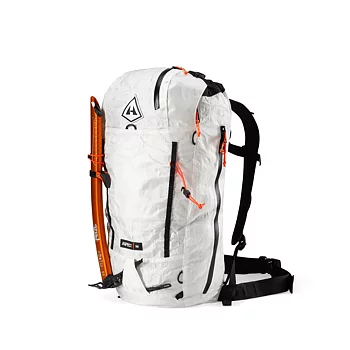
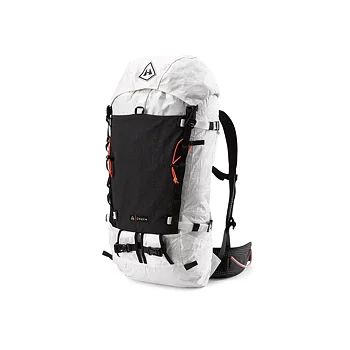
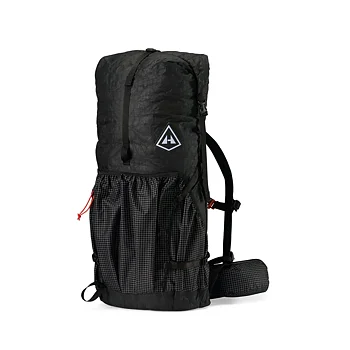
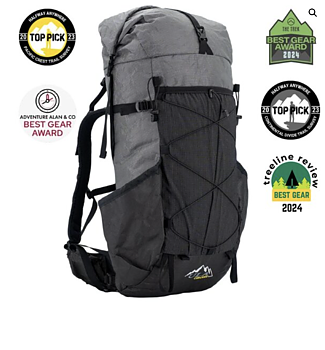
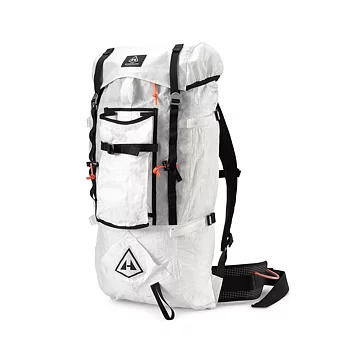
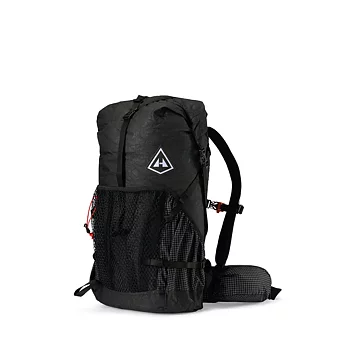
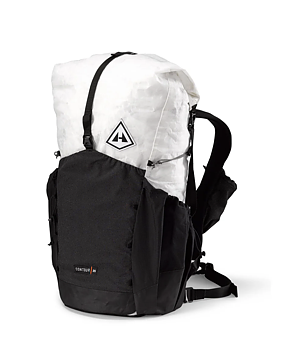
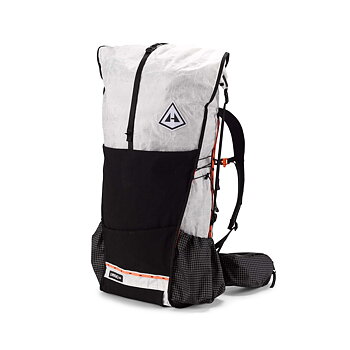
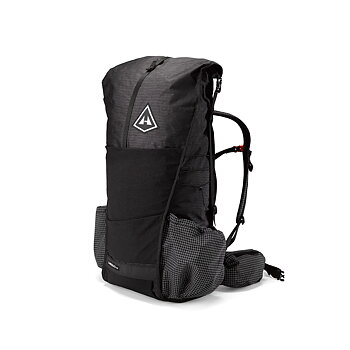
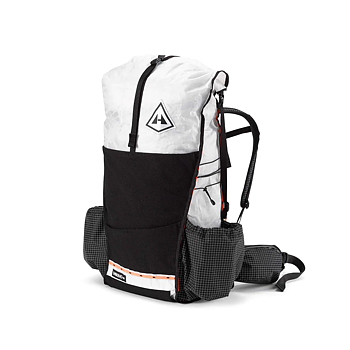
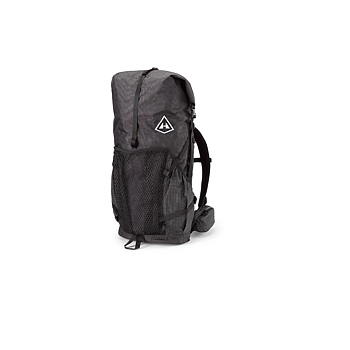
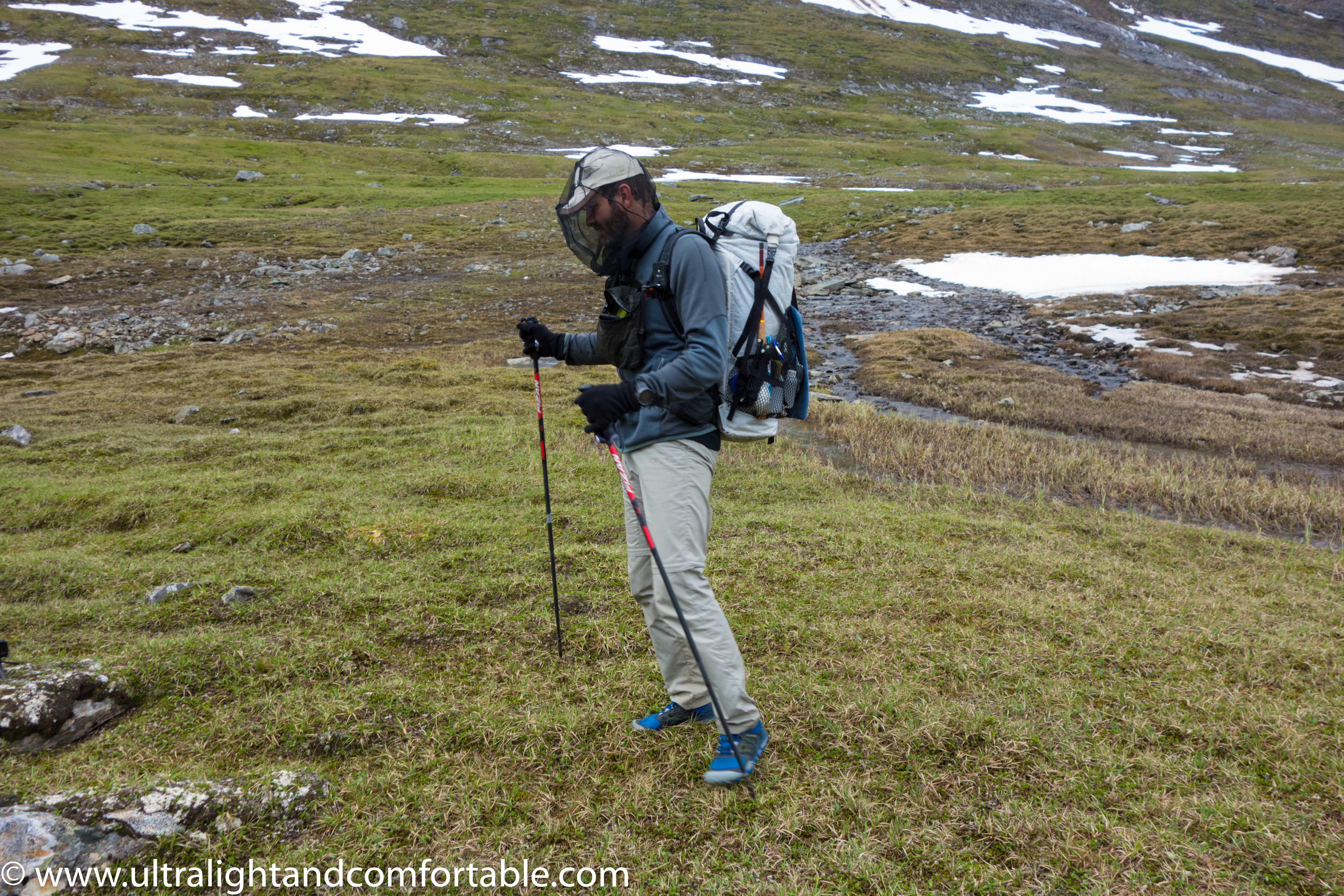 The Hyperlite mountain gear 4400 is probably the best backpack being made right now. Lightweight, rugged, waterproof and excellent carrying capabilities (Kenneth Shaw - Backpackinglight.se)
The big secret to a lighter backpack is so simple that I missed it for years. The secret is: The lighter the gear I carry, the lighter the backpack can be.
Chris Townsend, whose experience as a hiker and expertise as an equipment tester is hardly questioned by anyone, did a test for Backpackinglight.com back in 2008. Backpackinglight.com is a paid, US-based online magazine that has probably inspired more light packers worldwide than any other information channel. The test Chris did consisted of half a dozen lightweight backpacks tested with heavy packs. The load was 25 kilograms and Townsend's conclusion was that back then, in 2008, there were several backpacks that handled this load well without weighing more than 1.8 kilograms themselves.
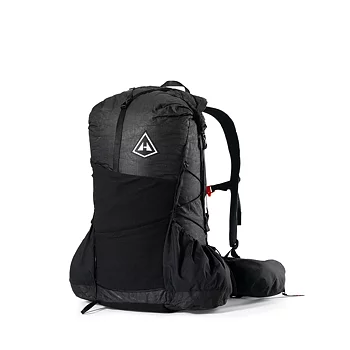
Since 2008, the development has also progressed and I myself have carried almost 25 kilos in a backpack that weighs only 1 kilo empty. This is my current favorite backpack model larger (70 liters) from Hyperlite Mountain Gear. There are extreme people and extreme situations, but most of us hikers don't want or need to carry a heavier pack in any context.
Conclusion: To be able to carry up to 25 kilos reasonably comfortably (it is never comfortable to carry 25 kilos) without a carrying system that collapses under the weight, no hiker needs to use a backpack that weighs more than 1 kilo. The most common reason why many do is ignorance. And perhaps a healthy dose of conservatism. There is nothing that the average hiker can save more weight on than by choosing a lighter backpack. And don't let anyone fool you into thinking that there aren't lightweight backpacks that can do the job. Which, of course, is not to say that all lightweight backpacks are up to the job.
What I'm going to concentrate on are lightweight backpacks that are big enough to hold overnight gear as well as food and other gadgets for 3-4 days or more. For most lightweight packers, who are not super ultralight, this means that the bag should hold from 45-70 liters. This means carrying a maximum of 10 kilos for a three to four day trip and no more than 15 kilos for a week-long trip.
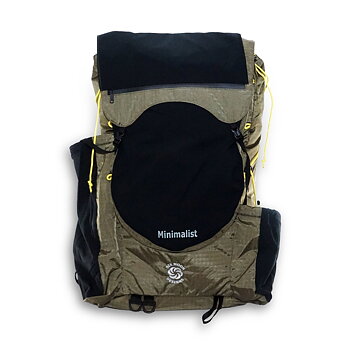
The simplest model of useful backpacks, where I have used several home-made and purchased backpacks, is a thin nylon bag with a carrying system, but without any stabilizing frame construction. They work surprisingly well, but require some fiddling when packing them. There are still some of these lightweight 400-800 gram backpacks on the market, but they don't have much of a weight advantage over backpacks that have some sort of carbon fiber, aluminum or plastic laminate frame. Today, there are backpacks with lightweight frame constructions that weigh 600-1000 grams and can carry at least 10-15 kilos, which is enough for 9 out of 10 trips I make. Lightweight frameless backpacks are best suited for shorter trips or for those who are willing to minimize packing and make an effort to pack them properly.
These lightweight packs are not as durable as the large packs used by paratroopers, North Pole explorers and those who wish they were one or the other. But don't be under the impression that this means these lightweight packs will fall apart on the first day in the mountains. It's not as if the seemingly thin weaves are torn to shreds on a first hike through willow thickets or other dense forest.
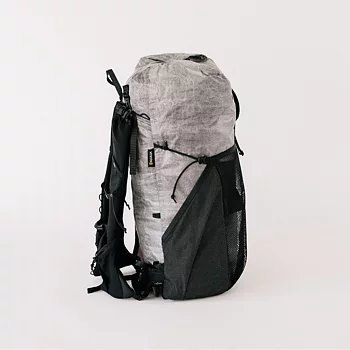
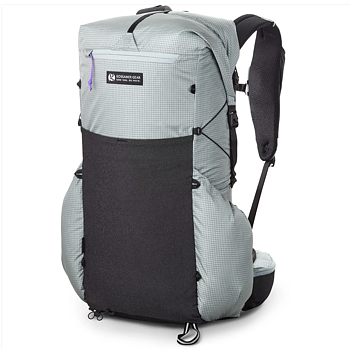
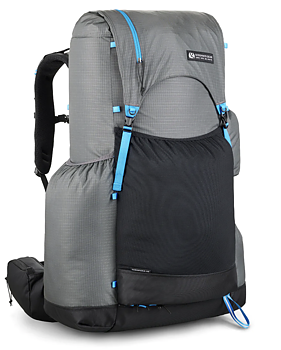
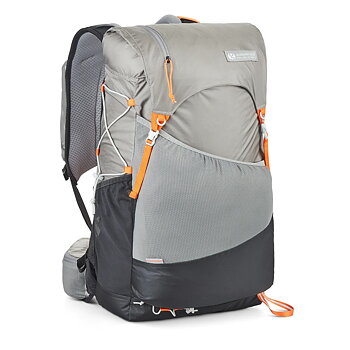
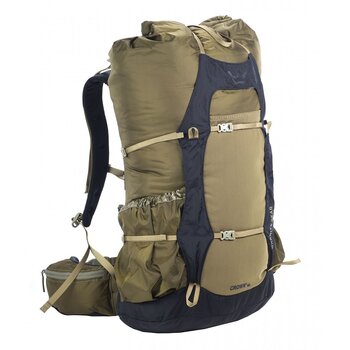
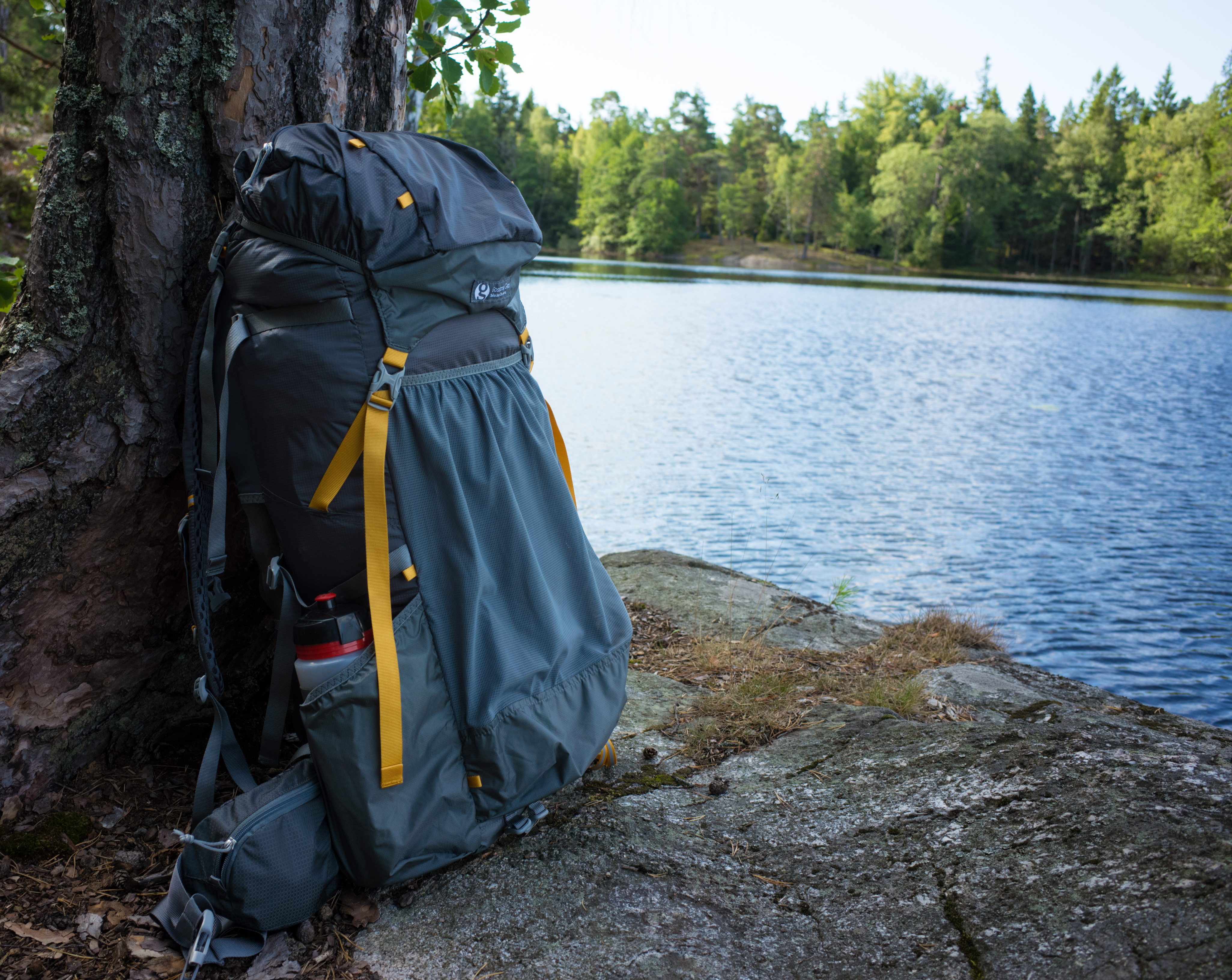 The Gossamer gear gorilla is a lightweight 50L backpack. Photo: Kenneth Shaw Backpackinglight.se
Lightweight backpacks last at least as long as more robust models. For example, we have Hyperlite backpacks that have been used for over ten years and still work great. In my experience, lighter packs are often used more than heavier alternatives - simply because they are the first choice of long-distance hikers.
I have a Hyperlite Southwest and a Gossamer Gear Mariposa, both of which are 10 years old. They are still 100 percent functional, but of course you can tell they have been up the mountain and down the river.
Finding a backpack model that's right for you
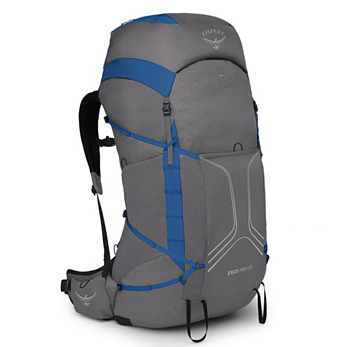
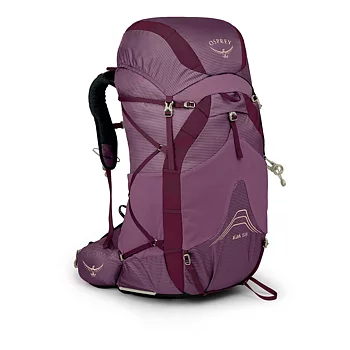
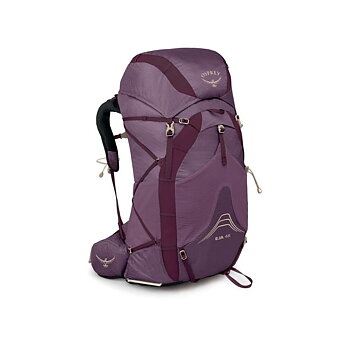
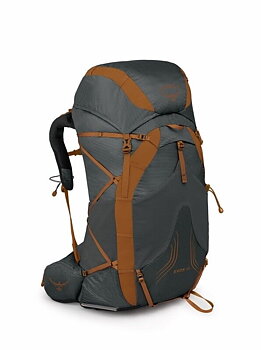
Many of our store customers come to us with a particular model in mind, only to find that a different backpack suits them better. We often see shoppers who were initially aiming for a Hyperlite Unbound, for example, but instead buy a Gossamer Gear Mariposa or an Osprey Exos Pro - or vice versa. It's not about what's popular, but about what suits you best!
We get it - you've been eyeing a specific backpack. But before you click "Add to Cart," let's talk about something that can make or break your hiking experience: how the backpack sits on your body. When shopping online, it's easy to focus on specs and style, but the truth is, the most important thing is finding a backpack that fits
your body.
Shoulder straps: J vs. S - What's the difference?
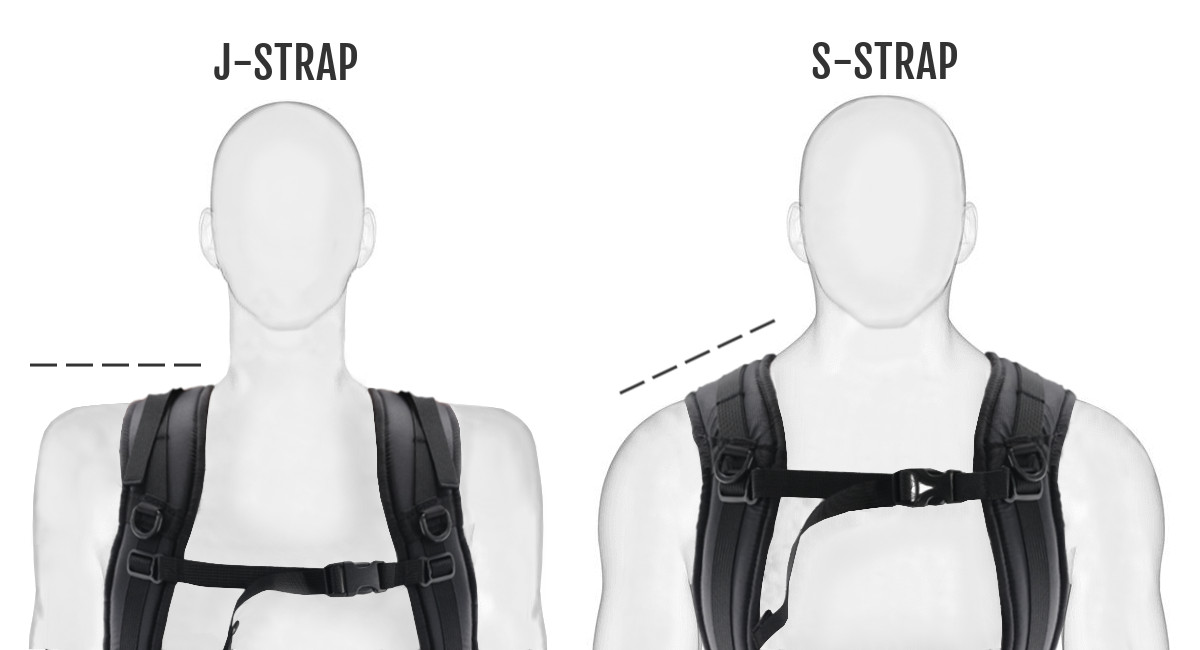
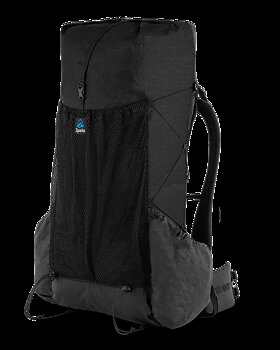
Ula makes great backpacks that we sell here at Backpackinglight.se. The image above is from their web shop explains very well how your body type fits with J or S straps.
One of the most important, but often overlooked, factors of backpacking comfort is precisely the shape of the shoulder straps:
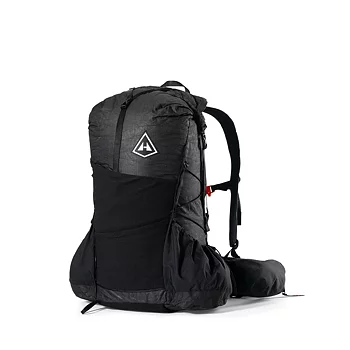
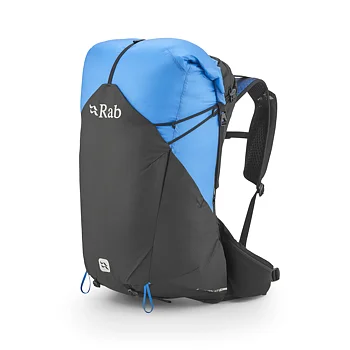
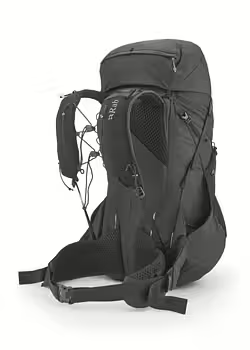
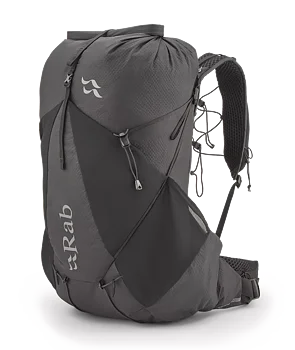
- Chest Carrying Backpacks An emerging trend among lightweight backpacks is the use of chest-carrying shoulder straps, which were previously found primarily in running backpacks. This design has significantly wider shoulder straps, and the idea is that the carrying weight is distributed across the entire upper body instead of a frame carried up the hip. These backpacks usually lack stable frames but for that reason they are not at all uncomfortable to wear on your back. If you've gotten to the stage where your total carrying weight is approaching 10 kg, this could be your next step, a step that allows your backpack to weigh as little as 400-600 grams
It's worth pointing out that these types of backpacks vary in the support provided by the hip belt. Some models only include a small strap, while others may not offer any substantial hip support at all. In these cases, the design is intended to shift the carrying burden primarily to the chest and entire upper body. Although these backpacks generally fit most body types, people with larger busts may find the chest straps somewhat restrictive, as they provide a closer and more secure fit that may lead to discomfort for some users.
Do you need load lifters on backpacks?
Load lifters are the straps that run from the shoulder straps up to the top of the backpack. Their job is to adjust how weight is distributed between the shoulders and hips. On many traditional and heavier hiking packs, they are an integral part of the design - but what about lighter packs?
When load lifters come in handy
On packs with a larger packing volume (often 60 liters or more) and where the weight can get heavy, load lifters help shift the center of gravity closer to the body. They reduce pressure on the shoulders and provide a more stable feeling, especially on hilly terrain.
On lighter backpacks
Many modern lightweight backpacks lack load lifters. This is partly because they are often designed for pack weights below 12-15 kilograms, where the need is less, and partly because the construction is kept simpler and lighter. A lighter bag is carried differently - instead of relying on adjustability, comfort is based on a well-balanced design and proper packing technique.
Our experience
We find that many long-distance hikers prefer backpacks without load lifters, precisely because they are lighter and more streamlined. For those who pack minimalistically and keep the weight down, load lifters are usually superfluous. However, they can be an advantage for those who carry heavier packs or want more adjustment options while hiking.
Summary: Load lifters are important on traditional, heavier packs - but on lightweight backpacks they are rarely necessary. Instead, it's the design and packing discipline that determines comfort.
Summary about backpacks
-Almost no hiker who chooses lightweight equipment needs a backpack that holds more than 50-60 liters and can handle 15 kilos of maximum load. That's enough to carry all your gear, food and fuel for a week. I would never buy a backpack of that size that weighs more than 1.5 kilos.
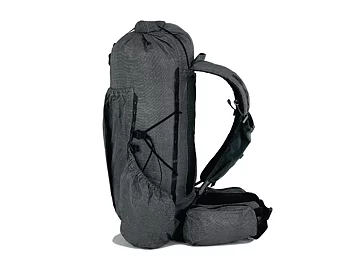
- For a hiking backpack, many outer pockets, preferably made of mesh (which also does not tear in the first snowfall...), are very useful. This is where I keep my tent, rainwear and much more
-Compression straps are important to reduce the volume of the backpack and I always use them when I am not fully packed. Then I make the backpack narrow and high with the straps and test if all the equipment fits. Once everything is packed, I tighten the straps so that the backpack is compact like a well-stuffed sausage. The heaviest items are closest to my back. Parallel compression straps along both sides of the pack have worked better for me than zig-zag straps that slip easily and result in a pear-shaped pack with poor carrying characteristics.
Here's a list of backpacks that fit my preferences of 50-60 liters and weight around 1 kilo. The lightest backpacks on this list tend to be slightly more expensive than the heavier ones, but all of them are cheaper than most branded backpacks that weigh 2-4 kilos.
Under 1.5 kilos:
Bergan Helium 55
Exped Lightning 60
Under 1 kilo